Young People Battling Procrastination

Small Steps, Big Momentum
Some days, starting feels harder than the task itself. Studying, cleaning, replying, or practicing can feel huge—especially when routines, stress, sleep, or seasonal change. That doesn’t mean you’re lazy or lacking motivation. Procrastination is often your brain asking for support. Let’s make the first step tiny, gentle, and doable.
Try this little reset 🌱
Start with just five minutes.
Break one big task into one small step.
Add light, movement, water, or a snack.
Put your phone away and make your plan visible.
Understanding Procrastination
Fear of Failure: Worrying about not meeting expectations can lead to avoidance.
Perfectionism: The desire to complete a task flawlessly can result in delaying it altogether.
Lack of Motivation: When tasks seem uninteresting or overwhelming, it's easy to put them off.
Distractions: In a world filled with notifications and entertainment, staying focused can be challenging.
Poor Time Management: Underestimating the time required for tasks can lead to last-minute rushes.
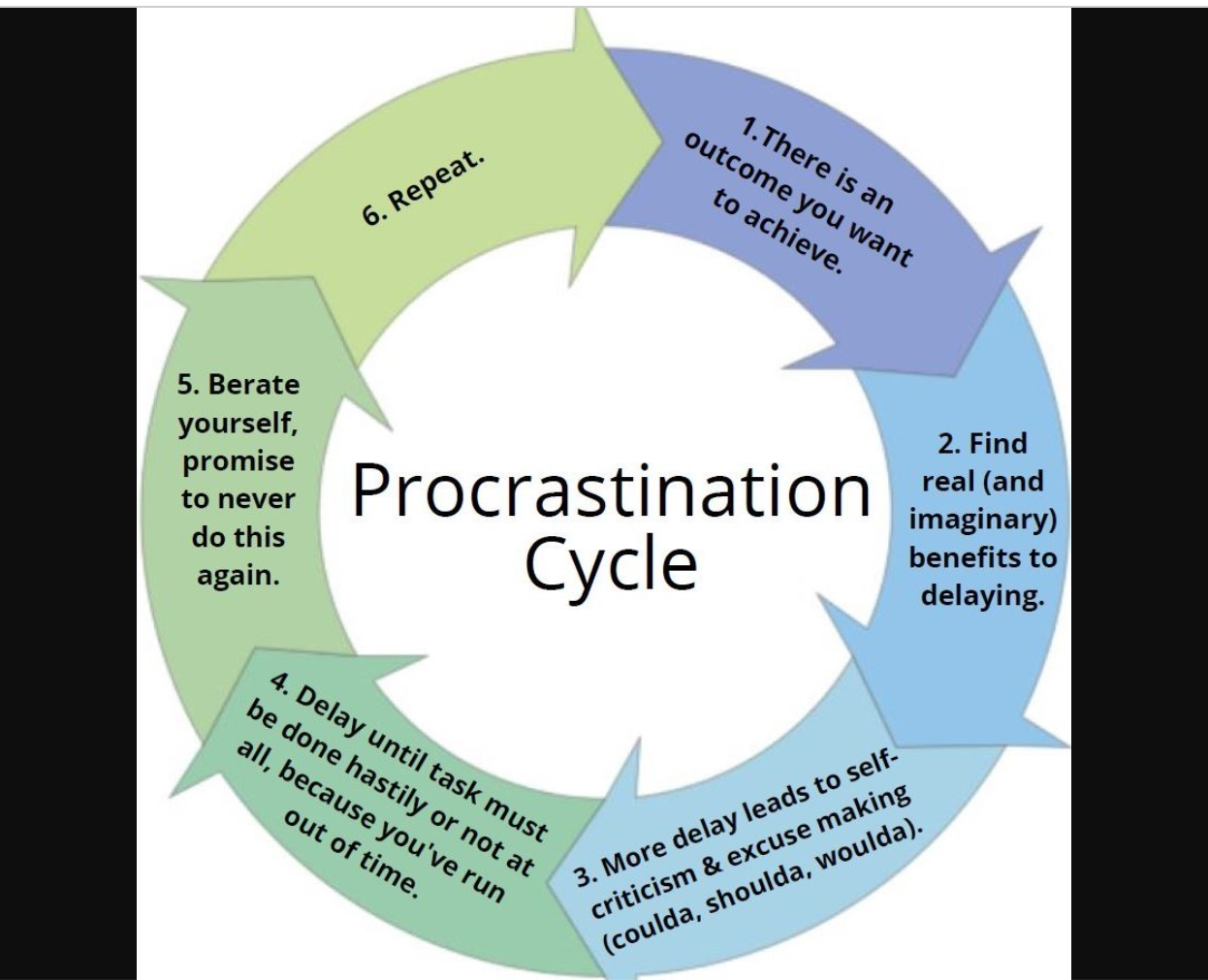
Strategies to Overcome Procrastination
1. Set Clear Goals
Define specific, measurable, achievable, relevant, and time-bound (SMART) goals.
Break larger tasks into smaller, manageable steps to make them less daunting.
2. Create a Schedule
Use a planner or digital calendar (I do color-coded) to allocate specific times for tasks.
Prioritize tasks based on deadlines and importance.
3. Eliminate Distractions
Identify what distracts you (e.g., social media, noise) and minimize these interruptions.
Create a dedicated workspace that is conducive to focus.
4. Use Time Management Techniques
Try techniques that involve working for a set period, such as 25 minutes, followed by a short break of 5 minutes.
Set timers to create a sense of urgency and keep you on track.
5. Practice Self-Compassion
Acknowledge that everyone procrastinates occasionally and that it's a part of being human. Use my "Zen" technique of - "nobody cares how you feel about this task, just do it."
Replace negative self-talk with positive affirmations to boost motivation.
6. Seek Accountability
Share your goals with a friend or colleague who can help keep you accountable.
Consider joining a study group or finding an accountability partner.
Conclusion
Overcoming procrastination is a gradual process that requires self-awareness and commitment. By understanding its causes and implementing effective strategies, you can break the cycle and enhance your productivity. Remember, small changes can lead to significant improvements over time.


Comments